
 Back in the 1970s, air pollution was really bad. The average car back then put out literally 20 times the amount of harmful emissions than today’s average car. If the government had not stepped in and made laws that forced car manufacturers to clean up what was coming out of tailpipes, I am sure we’d have dirtier air today.
I haven’t been to China, but I understand the air in Beijing is a lot worse than the air in any American city. Why? A lack of governmental regulation.
I fully understand that not all governmental interventions in life and public policy are beneficial. But some are.
I challenge you to argue with me on this one.
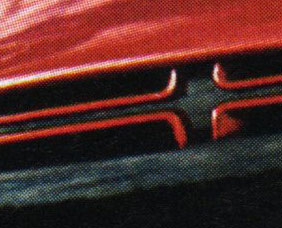
The photo is an enlargement of a shot from Autoweek Magazine. Their May 14, 2012 issue has an article about the new Dodge Dart. Its front grille shuts at certain speeds to improve fuel economy – because of governmental regulations for car manufacturers to increase fuel economy. I think that’s awesome.


Regulation becomes political, so it’s never about a logical look at the actual issue. It’s a win/lose battle of emotion vs. money, and we tend to go to the extreme of the winner.
Nobody likes air polution, but you still know people who say the evil government shouldn’t ever mess with private enterprise even when it poisons the environment. Everyone wants economic development, but some folks will argue for blocking a project that displaces a few prairie dogs.
You hint at one of the key ways forward – balance. And as we all know, it’s very elusive.
Hmmm – first I’ve heard of the Dart being “reborn”. Can’t say I find the design especially groundbreaking, but maybe that’s just me. They didn’t make any effort to connect it with the car of the 60s/70s, as they did with the new Challenger.
I’m not convinced it’s really possible to find true balance, considering the number of people in this country, each with their own opinion. Someone is always going to feel slighted. But what Rick says is true – government seems to have become more about which party wins rather than what’s best for the country.
I have a friend who is rabidly libertarian and decries all government regulation, but I doubt he spends much time thinking about the quality of his drinking water or of the medicines his daughter’s pediatrician prescribes; or the difference there would be in accident rates if speed limits didn’t exist. I didn’t see industry making much effort to contain pollution until they were forced to do it, back in the 1970s.
US auto manufacturers were still making huge clunky cars into the late 1970s, long after people had been making noise about pollution and fuel economy. If it hadn’t been for having to compete with Japanese economy cars, they probably would have kept putting V-6s and V-8s into everything for another decade.
On the other hand, there are regulations that are protectionistic for interest groups, like the requirement in Illinois that construction work be done by union members. This increases the price and lengthens the response time and does nothing to improve quality of work done.
Building inspections, on the other hand, sometimes save lives and the property owner’s money. There are enough horror stories already in the world of remodeling and construction. I can’t imagine how many more people would get screwed if city building inspections didn’t happen. A private inspection provides no enforcement authority.
Deb – agreed. However, I like the new Dart’s style. It’s somehow less bulbous and bulky than the Challenger.
Tim – some great illustrations & points. Gov’t intervention can go too far – and when it’s not there, lives can be in peril.