What once held value

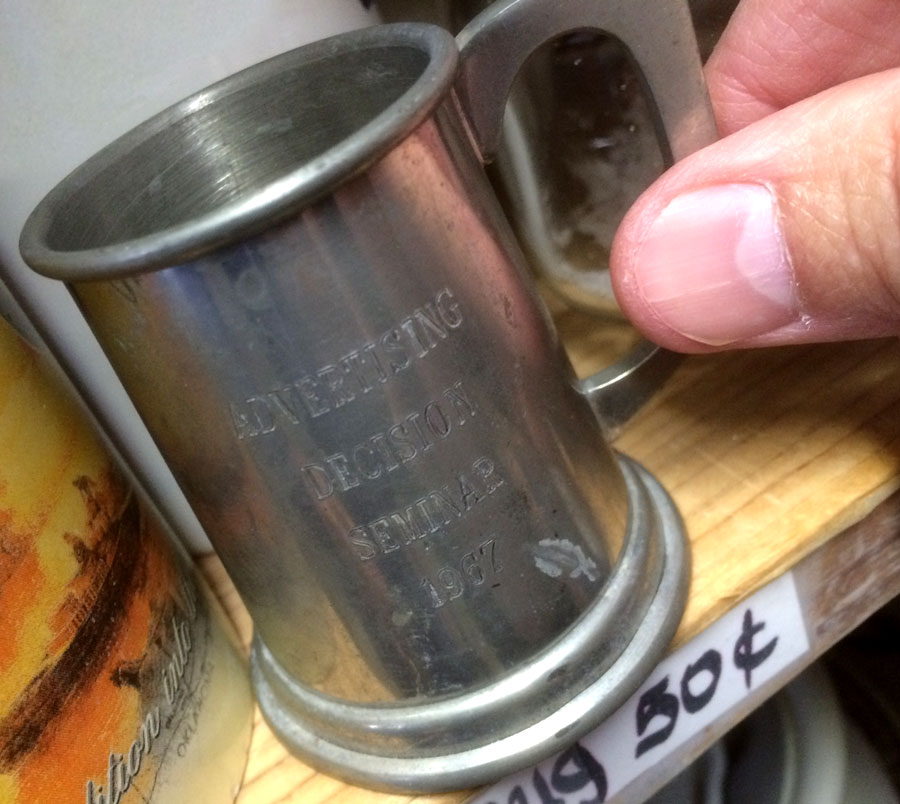
tiny promotional mug from 1967I love visiting thrift shops. It’s hereditary – my dad did, my sister does, and now my daughter joined the club as well.

Any visit to a thrift shop is a lesson in value. What once held value no longer does. Or in some cases, what’s there never held value for anyone.

Take this little mug, dating back to 1967. It commemorates the participation in an “Advertising Decision Seminar.” There’s no first place – you got a mug just for showing up. It’s the size of a shot glass but shaped like a beer stein – and not good for either use.

Today’s tiny shiny conclusion is that people should consider the value of a gift before investing time and money in the purchase. Don’t sell ice to eskimos, as the saying goes.

FacebooktwitterpinterestlinkedinmailFacebooktwitterpinterestlinkedinmail

Don’t wait

Ceiling speakerI waited.

For more than a year, I heard Taylor Swift – and her friends – singing the same songs over and over and over. The company that runs the building I work in hires Muzak to pipe tunes into our halls and bathrooms.

My brain has a problem with repetition – when I hear the same song over and over, it starts burrowing into the deep crevices of my consciousness until I feel like I’m about to die.

Well, not really, but you get the point.

My daughter heard me complain, over and over, about the music in my office building. She finally asked, “Dad, why don’t you ask the company that runs your building if they could change the music?”

I came up with a few excuses. She kept asking me. Finally, I tracked down the building management company, and they agreed to change the music.

Why did I wait so long?!

Moral of the story – don’t wait. Ask the gatekeepers to change. They just might!

By the way, Muzak is now called Mood. For those of you who haven’t heard of Muzak, that is the company that caused the creation of the term, “elevator music.”

FacebooktwitterpinterestlinkedinmailFacebooktwitterpinterestlinkedinmail

Slower than Anything

road construction This is a guest post by my brother, Bill Merrill. Thanks Bill!

For most of my life, when I wanted to say how slow something was, I’d use one of the standard phrase “slower than molasses in January.” In recent years, I’ve switched over to “slower than highway construction.” According to our friend the internet, the US federal government currently spends about $40 billion on our roadways each year, an amount that has steadily increased throughout the years, even in current-year dollars. In my own experience, it hardly seems I can drive anywhere in any big city without encountering one construction project or other. (By the way, this was NOT the case in my vacation a couple of months ago in the Benelux countries of Europe.)

It’s not just that progress is so soooo slow on these projects – the average length of a project here seems to be about seven years – but also that there are many times when I drive by the construction site and nothing is happening at all. There is a turn-around on a freeway overpass near my credit union branch that’s been underway for about a year now, and I wonder why it’s not finished yet. Most times lately when I pass the turn-around, construction equipment sits idle, no sign of life anywhere. This can be frustrating, but I try to be mature about things like this, and not let my frustration turn into unproductive, useless anger.

I’m not in the highway construction business, but I had enough indirect contact with it earlier in my professional life that I suspect this kind of situation is a result of scheduling issues, or maybe budgetary considerations. The particular turn-around in question is part of a much larger highway project, so maybe the turn-around is on hold until some connecting piece of the project is finished. And it is certainly not the workers’ fault, so it would be totally unfair to be hostile toward them in any way.

(By the way, turn-arounds are really wonderful things, allowing vehicles going from an access road to its opposite-direction counterpart to avoid waiting through traffic lights! They don’t exist everywhere, but they should!)

Editor’s notes: 1) Colorado does not have those turn-arounds, and we wish they did! 2) Bill took the photo at the road construction site mentioned in this post.

FacebooktwitterpinterestlinkedinmailFacebooktwitterpinterestlinkedinmail

Treat your body like…

…it belongs to someone you love.

treat-your-body-well

Self-destructive behaviors abound. (And I’m far from perfect.) But I love this saying – how often do we treat our bodies like we love ourselves? Even more important, how often do we treat others better than ourselves? (See here.)

If we truly followed that saying, would we shop at Whole Foods to pick up food for that homeless person we see on the corner on our way to the office?

(Thanks to Whole Foods for their store-window poster.)

FacebooktwitterpinterestlinkedinmailFacebooktwitterpinterestlinkedinmail

The problem of where they should live

aspen-airportPlaces like Aspen and Breckenridge have a problem: people who work there can’t live anywhere close.


Jonathan Thompson wrote an article about this in The Denver Post (link). He outlines the problem far better than I can – and backs it up with good research.

But Jonathan did not propose any solutions. I will.

Part-time residents in such places should pay a tax to build affordable housing in close proximity. That tax should be based on the amount of time they don’t live there. In other words, if someone lives in their vacation home just three weekends a year, their tax would be higher than someone who lives there year-round. Or than someone who rents out their vacation home during the time they’re not there.


I know this is the kind of post that many read and take issue with. I’m turning off comments for this post only, as it’s one of those things where if you believe differently, I can’t convince you of my point – and vice-versa.

p.s. I love Aspen. And Breckenridge. And their competition. I took the photo above during a brief visit in 2007. That’s the airport just outside Aspen, which has a greater density of Learjets than any other airport in the USA. (That is not a statistic I can back up.)

FacebooktwitterpinterestlinkedinmailFacebooktwitterpinterestlinkedinmail

What kind of light are you letting into your life?

tilesThe tiles in our bathroom change in color and shadow depth during the course of every day. In the same way, my mood changes, depending on what is happening outside of me.

My mood sometimes changes due to inside forces. I let my response to events drag me down. Other times, I am in a strong place and am almost immune to difficult situations.

But inside is affected by outside. The voices I allow myself to hear affect the way I deal with life. If I’m always listening to negativity, I will tend to be negative. Positivity leads to being positive.

But false messages of either type never have a good effect. Truth is always the best thing, even if it hurts. (However, we do not always need to tell everyone everything.)

Who are you listening to today?

FacebooktwitterpinterestlinkedinmailFacebooktwitterpinterestlinkedinmail

Sad to see them go

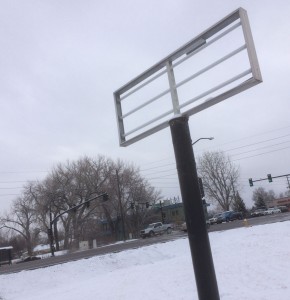
dead-signAnother local business died. After 31 years, Arapahoe Cyclery closed their doors. Mike and Greg were amazing mechanics, nice guys, and a pleasure to do business with.


What’s sad is that I didn’t get the opportunity to say goodbye. Since we’re in the depths of snowy weather, I hadn’t been through their doors in a few months. I’m hoping I’ll run into one of them at some point, so I can share my pain at the loss.

Rather than go into a long rant about why it’s good to give business to your local independent shops, I’ll just ask you to try to do that when you can.

By the way, the sign is from the same plaza the bike shop was in. It was for an auto parts store that closed down within the last year. My hopes aren’t too high for the new fitness center that recently opened.

FacebooktwitterpinterestlinkedinmailFacebooktwitterpinterestlinkedinmail

Slow Down

Writing with a fountain pen on a postcard, copyright Paul MerrillI’ve discovered the joys of using a fountain pen. It gives me a unique sense of pleasure to feel the pen tip moving across the paper. The paper’s texture enters my brain in a way it never could if I was using my super-smooth ball-point pen.

My sister and her family raise chickens. Sure, it takes a lot more work to keep those birds happy compared to simply buying eggs at their local supermarket. I am sure that the eggs taste better – and that their kids are learning responsibility in a way that schoolwork alone could never do.

The book Words Onscreen (by Naomi Baron) advocates moving away from electronic books – and back to the old paper variety. At least one of the reasons is that printed typography can be better. I’m not sure I am willing to ditch my old Kindle, but it’s worth considering.

Walking or riding a bike to get somewhere takes a lot more time. Time is money, so it can be expensive too. But you’ll smell the roses along the way.

Brewing coffee with a French press takes longer than an electric drip machine. But I like the taste better.

I’ve started sending old postcards, by snailmail, to friends. I like using my fountain pen and making that small analog connection with humans. (Who doesn’t like to get something in the mail?) If you’d like to get a free postcard, send an email to me (with your address) at phmerrill at gmail dot com. Apologies, but if you live outside the USA, I can’t afford the postage – about four times more!

The photograph was taken by my daughter Rachel.

FacebooktwitterpinterestlinkedinmailFacebooktwitterpinterestlinkedinmail

Tension

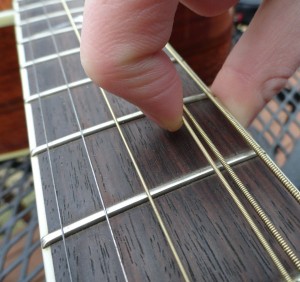
pulling a guitar stringTension can make or break us. Too much tension can ruin a relationship. Too little tension can bring on depression.

We are naturally drawn to seek tension, because it’s healthy. But we are also repelled by situations that  cause too much tension.

We all fall in a spectrum of desire too much or too little tension.

Benoît Lecomte plans to swim across the Pacific Ocean.  (He has already crossed the Atlantic.) Mr. Lecomte is seeking a huge amount of personal tension. I am not sure why he is seeking such levels of pain. He will either receive the fame that comes with being the first to complete such a feat – or he may lose his life. I appreciate how people like Benoît push the boundaries of humans accomplishment.

At the other end of the tension spectrum is someone I knew who died for lack of tension. They refused to exercise to the point of losing most physical capabilities. They insisted on their own way by refusing healthy choices, some of which resulted in their eventual death. Their driving motivation was to avoid pain.

You most likely fall somewhere in the middle. My struggle is not judging people at either extreme.

Another struggle I face is pushing myself from the complacent end of the spectrum toward the middle. I know that I need more tension, like in the area of exercise. In some areas of life, I need less tension.

Balance is elusive.

FacebooktwitterpinterestlinkedinmailFacebooktwitterpinterestlinkedinmail